

Analytics
The methodology and structure of the Index make it possible to assess the transparency not only of the energy sector as a whole, but also of individual markets, public authorities and categories (these are the "subtopics" of the Index that reflect a certain aspect of the functioning of the energy industry - the activities of natural monopolies, security of supply measures, etc.). Such level of detail allows for a deeper analysis of information disclosure practices, identification of authorities/markets, which implement best practices in transparency or which, on the contrary, have unused potential for transparency increase. Deeper analysis, in turn, allows for more targeted recommendations to improve openness and accountability in the sector.
Annual Index scores
The methodology of the Energy Transparency Index applies the statistical method of multidimensional weighted average, applied to assess complex objects, processes, and phenomena.
An evaluation of Ukraine's energy sector transparency is carried out annually. The total index score can vary from 0 to 100, which allows tracking the overall level of transparency of the energy sector and its dynamics.
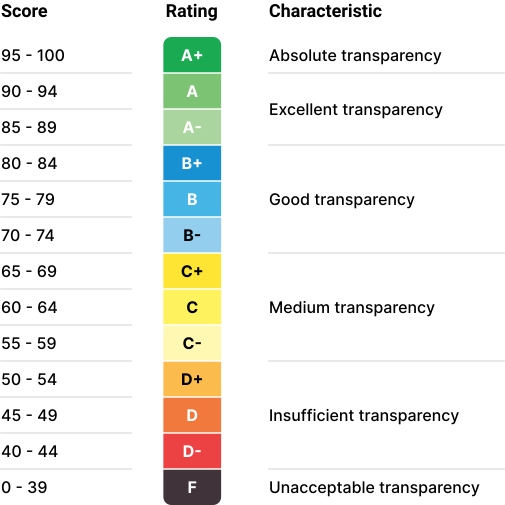
Interpretation of scores
All calculated transparency scores (by category, subcategory, market, public authority) are converted into a universal 100-point scale, rounded off to the integer digits, and have the following interpretation:
Transparency by category
All indicators of the Index are grouped into eight categories reflecting various aspects of the energy sector functioning:
- "Balances": transparency of annual and monthly energy statistics;
- "Natural monopolies": transparency of transmission and distribution system operators;
- "Supply": transparency of rules, competition, and pricing in energy markets;
- "Reliability and security": transparency of stocks and reserves, rules and reports on security of supply;
- "Consumption": transparency of service standards, metering, information for consumers about prices and tariffs, subsidies and other aid, energy efficiency programs, commercial offers of suppliers, and price comparison tools;
- "Reporting": transparency of corporate financial statements and auditor reports, management reports, disclosure of non-financial information, payments to the government, information regarding corporate governance and final beneficiaries;
- "Policy": transparency of implementing strategic and program documents of energy policy and sustainable development, the policy of energy efficiency, environmental protection, combating climate change and renewables, etc.;
- "Public authorities": transparency of public spendings and state aid; developing, adopting, and implementing of the policy decisions, regulatory impact assessment; forming the management bodies.
The chart demonstrates the level of Ukraine's energy sector transparency by categories of the Index and allows progress tracking.
Transparency by subcategory
To provide a deeper understanding of Ukraine's energy sector transparency, the indicators of the Index's categories are grouped into subcategories. It allows to see a detailed picture and more clearly identify gaps.
The chart below demonstrates transparency scores for 24 subcategories comprising eight categories of the Index.
Transparency by energy market
Transparency of energy markets is critical for promoting their competitiveness, effective performance, fair pricing, a favorable investment climate, and better consumer services.
The Index encompasses five energy markets:
- natural gas;
- electricity;
- oil and liquid fuel;
- steam coal;
- heat.
Total transparency scores were calculated for each energy market, as well as scores by sectoral categories - Balances, Natural monopolies, Supply, Reliability and security, Consumption - related to a particular energy market.
The other three categories - Reporting, Policy, and Public authorities - are cross-sectoral and relate to the whole energy sector. Thus, they were not included in calculation of the markets' transparency.
Energy markets are characterized by different levels of regulation and legislative requirements regarding the disclosure of information by their participants. These differences eventually influenced the results of Ukraine's energy markets transparency assessment. For the still developing energy markets - steam coal and heating - the calculated scores should be considered only for reference.